
In the Public Interest by Child Abuse Survivors and their Advocates in their Pursuit of Justice, Recognition, Recovery and Redress.
<< First < Previous Current Page "1296" Next > Last >>
Article Category: Papal Visit - USA
Description: What was in the news In the week leading up to the papal visit to USA
Article originally prepared on : 14 April 2008

______.oooOOOØOOOooo.______
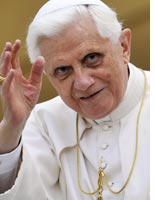
WhenCardinal Joseph Ratzinger was elected Pope Benedict XVI on April 19,2005, Catholic conservatives in America were licking their chops. "The'progressive' project is over," Catholic neocon George Weigeltriumphantly announced. William Donohue, the eccentric, right-wingpresident of the Catholic League, said of Catholic liberals, "We expectthat the weeping and gnashing of teeth will begin soon."
Three years later, as American Catholics prepare for the pope's visitnext week, those same conservatives in the United States have beendisappointed. They had hoped Benedict would confront liberal tendenciesin the church. Some, like Weigel, sought to purge the presbyterate ofgays whom they blamed for the sex-abuse scandal. They wanted theecclesiastical equivalent of court-packing, with the pope appointingonly conservatives to major posts. But Benedict has defied them in hisappointments, in his views on capitalism and the war in Iraq, and evenin his approach to other faiths. "No one would call Benedict thedarling of the left, but he has been moderate, pastoral, tolerant,nuanced," says Monsignor Lorenzo Albacete, a theologian and U.S. leaderof the Catholic group Communione e Liberazione.
The next year, when Benedict had to appoint a new archbishop forWashington, D.C.—his first major stateside appointment—neocons hoped hewould redeem himself. They championed three archbishops who hadpublicly urged denying communion to pro-choice politicians during the2004 election: Charles Chaput of Denver, Raymond Burke of St. Louis,and John Myers of Newark, N.J. Instead, Benedict chose PittsburghBishop Donald Wuerl, a moderate who has opposed turning the communionrail into a political battle station. Benedict further disappointedconservatives hellbent on denying communion to pro-choice politicianswhen he named as cardinal Boston Archbishop Sean O'Malley, who refusedto order Sen. John Kerry out of church. Benedict's choices shouldn'thave surprised anyone, though. According to one American present duringa spring 2004 Vatican meeting with U.S. bishops, then-CardinalRatzinger laughed when he heard of denying politicians communion basedon their political views. After all, popes have, over the years, givencommunion to Communist mayors, gay legislators, and countlesspro-choice politicians.
Pope Benedict shares virtually none of the core political beliefs of American neocons. In his book Jesus of Nazareth, hewarned against "capitalism that degrades man to the level ofmerchandise." He has consistently spoken out against the Iraq war. Andthe whole reason Benedict is coming to America is to address the UnitedNations, which is not the neocons' favorite organization. Even whenBenedict has endorsed a part of the conservative agenda, he has done sowith none of the rigidity that characterizes the writings of AmericanCatholic conservatives. Throughout his career, first as theologian,then as bishop and cardinal, and now as pope, Benedict has emphasizedthe centrality of the person of Christ in the salvation of the world.Yet he has been adept at making profound interreligious gestures,meeting with Muslim diplomats at the Vatican to soothe relations afteran unfortunate remark in a speech, reaching out to Eastern OrthodoxChristians at every opportunity, and even framing the central sectionof his book Jesus of Nazareth as a response to a book by his friend Rabbi Jacob Neusner. When Benedict brought back the traditional Tridentine Mass, he changed certain prayers from the Good Friday liturgy that were offensive to Jews.
Still,Pope Benedict is no liberal. One of the problems with most presscoverage of the Catholic Church is that the left-right template doesn'tfit very well. The right tends to ignore or water down the church'steachings about social justice, while the left frequently minimizes thechurch's teachings on sexual ethics. A pope can't side with eithergroup but must love them both and try to communicate the church'steachings in their entirety and integrity.
The differencebetween Ratzinger the cardinal—the man conservatives saw as an answerto their prayers—and Benedict the pope—who has disappointed those sameCatholics—has less to do with any changes within the man himself. Hehas, by almost all accounts, always been brilliant, concerned aboutoverly hasty theological change, personally kind, prayerful. What haschanged is his job. For 23 years, Cardinal Ratzinger's job was toprotect the deposit of faith from distortions or manipulations which,even if well-intended, might alter the content of what Catholicsbelieve was given them by God when He founded the church. This was adifficult and often controversial task, and it was a desk job. When hewas elected pope, he became a pastor. Albacete says, "He is committedto exploring how faith and reason work together to lead man to thetruth about himself. Benedict would never diminish himself, or hisoffice, fighting tired ideological battles." The change in roles can befound in another way: Until he was elected pope, had anyone ever seen apicture of Joseph Ratzinger embracing children?
Cheering the pope in Washington and New Yorkwill be those Catholics who look to their church for comfort andchallenge, for solace and strength, people who are more concerned aboutloving their pope than they are about any ideological battles within orwithout the church. Joining in the cheers will be many of those whogreeted his election with trepidation. And if there is any gnashing ofteeth, it will be coming from the bleachers on the far right.
______.oooOOOØOOOooo.______
If you wish to keep this article alive in the Internet Archive simply click the link below.
Click here to add this page to the Internet Archive

<< First < Previous Current Page "1296" Next > Last >>
Select from these TFYQA archives
Contact us if you have data you want to preserve.
Tell others, share this page on : X | BlueSky | Mastodon.Social | Strangeminds.Social | Facebook
Find us on X.com || New ID on Facebook || BlueSky || Mastodon.Social || Strangeminds.Social
trauma informed human rights justice failed institutions UN Convention on Human Rights Rights of the Child and a Bill of Rights for Australia future evidence resilience not providing or representing a secular Australia autodidact
Hegemony: The authority, dominance, and influence of one group, nation, or society over another group, nation, or society; typically through cultural, economic, or political means.
.
If you found this information to be of assistance please don't forget to donate so that we can extend these resources to more survivors. These pages are focused on preserving survivor relevant information. Information is not provided as legal or professional advice; it is provided as general information only and requires that you validate any information via your own legal or other professional service providers.
You can directly support my work at here